
A Taste of Italy Through Homemade Pasta
Pasta is one of Italy’s most familiar foods, but there is no single way to make it. Across the country, local ingredients, climate, history, and cooking customs have shaped hundreds of pasta styles. Some regions favor soft egg dough, while others rely on durum wheat and water. Some shapes are designed to hold rich sauces, and others are made for soups, baked dishes, or simple dressings.
Exploring these traditions at home is a rewarding way to improve your cooking skills. You do not need special equipment for every style. A rolling pin, sharp knife, clean work surface, and a little patience are enough to get started.
Emilia-Romagna: Egg Pasta and Filled Shapes
The northern region of Emilia-Romagna is known for delicate egg-based pasta. A classic dough often combines finely milled flour with eggs, creating a smooth, flexible texture. The dough is rolled thin and cut into ribbons or used to make filled pasta.
Try tagliatelle
Tagliatelle are long, flat ribbons that pair well with hearty sauces. To make them at home:
- Mix flour and eggs into a firm dough.
- Knead until smooth and elastic.
- Rest the dough under a bowl or wrapped in reusable food wrap.
- Roll it thin with a pasta machine or rolling pin.
- Cut the sheet into ribbons and dust lightly with flour.
Serve tagliatelle with a slow-cooked meat sauce, mushroom sauce, or a simple combination of butter and grated cheese. The broad shape gives the sauce plenty of surface area to cling to.
Try stuffed pasta
Tortelloni and ravioli are also associated with this region. Fillings may include ricotta, leafy greens, roasted squash, or cheese. Keep the filling fairly dry, and avoid overfilling each piece. Press the edges firmly to remove trapped air, which can cause the pasta to split during cooking.
Liguria: Fresh Herbs and Hand-Shaped Pasta
Liguria, along the northwest coast, is closely associated with fragrant herbs, especially basil. Its pasta traditions often highlight fresh, bright flavors rather than heavy sauces.
Make trofie
Trofie are short, twisted pieces of pasta traditionally shaped by hand. They are usually made with flour and water rather than eggs. Roll a small piece of dough into a thin strand, then twist it between your palms or against the work surface.
Trofie are a natural match for basil pesto. For a balanced dish, combine the pesto with a little pasta cooking water before tossing it with the cooked pasta. The starchy water helps create a smooth coating without making the sauce overly oily.
You can also serve trofie with green beans and potatoes, a combination commonly associated with Ligurian home cooking. Cook the vegetables until tender, then toss everything together with pesto.
Lazio: Simple Shapes and Strong Flavors
Central Italy’s Lazio region offers pasta traditions that are often simple in technique but bold in flavor. Many dishes rely on a short list of ingredients, so ingredient quality and careful timing matter.
Make tonnarelli or thick spaghetti
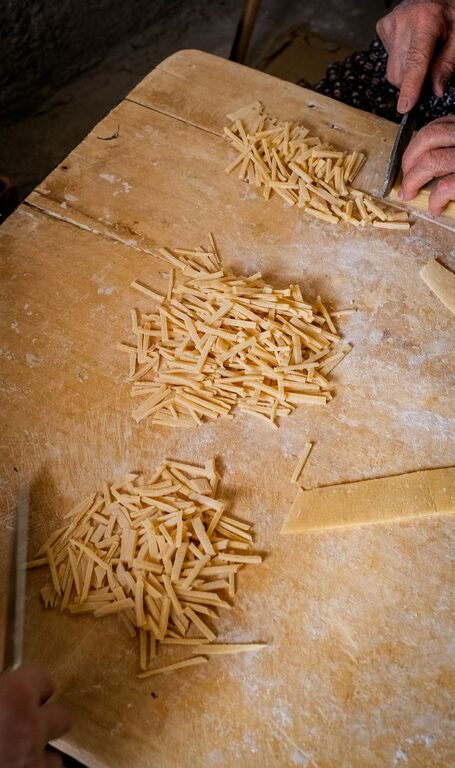
Tonnarelli are square-cut strands made from a firm dough. They can be prepared with flour and water or with an egg-based dough, depending on the recipe. Roll the dough into a sheet and cut it into thick strands using a knife or pasta cutter.
These noodles work well with a cheese and pepper sauce. The key is to combine finely grated cheese with warm pasta water until it forms a creamy mixture. Add the cooked pasta gradually and toss vigorously. Keep the heat low or turn it off while mixing to prevent the cheese from becoming grainy.
For a different direction, pair thick noodles with tomato, garlic, vegetables, or a light seafood sauce.
Puglia: Durum Wheat and Orecchiette
Puglia, in southern Italy, is well known for pasta made from durum wheat semolina and water. This dough is firm and holds its shape well, making it suitable for hand-shaped pasta.
Shape orecchiette
Orecchiette means “little ears,” a name that describes the pasta’s rounded, cupped form. To shape it:
- Roll the dough into a long rope.
- Cut it into small pieces.
- Drag a table knife across each piece to create a curl.
- Turn the piece over your thumb to form a small cup.
- Leave the shaped pasta to dry briefly before cooking.
The ridged interior and hollow center are excellent for catching vegetable sauces. Try orecchiette with broccoli, leafy greens, garlic, olive oil, and a little grated cheese. You can also use roasted vegetables, beans, or a simple tomato sauce.
Campania: Short Pasta and Baked Favorites
Campania, including the area around Naples, is celebrated for pasta made from durum wheat and water. The region’s warm climate and access to tomatoes helped shape many familiar pasta dishes.
Explore cavatelli
Cavatelli are small, shell-like pieces that can be made by pressing a finger into short pieces of dough. They are sturdy enough for thick sauces and baked dishes. Try them with tomato sauce, eggplant, zucchini, or beans.
Build a simple baked pasta
Baked pasta is a useful way to explore regional cooking while feeding a group. Use a short pasta shape, a flavorful sauce, cheese, and vegetables or cooked meat if desired. Cook the pasta until just shy of tender, combine it with the sauce, and finish it in the oven. Slightly undercooking the pasta at the boiling stage helps prevent a soft final texture.
Sicily: Bold Ingredients and Creative Shapes
Sicilian cooking reflects a mix of Mediterranean influences. Pasta dishes may feature tomatoes, eggplant, citrus, olives, raisins, toasted breadcrumbs, or seafood. The flavors are often lively, with a balance of sweet, salty, and savory notes.
Try a simple semolina dough with water and shape it into thick strands or small coils. Pair the pasta with roasted eggplant, tomato, garlic, and toasted breadcrumbs. Breadcrumbs can provide a crisp topping and are a practical alternative to grated cheese in some dishes.
When working with citrus, add grated zest near the end of cooking so its aroma remains fresh. A small amount can brighten a rich sauce without overpowering it.
Sardinia: Rustic Shapes Made by Hand
Sardinia has many distinctive pasta shapes, including malloreddus and culurgiones. Malloreddus are small ridged dumplings made from semolina dough. The ridges can be created with a wooden board, fork, or clean basket.
Culurgiones are filled pasta that may be sealed with a decorative braid. This shape takes practice, so start with simple half-moon parcels before attempting a more elaborate edge. Potato, cheese, and herbs are common inspirations for the filling.
Because handmade pasta varies in thickness, test one piece before cooking the entire batch. Adjust the cooking time as needed, and keep finished shapes separated on a floured tray.
Tips for a Successful Pasta Project
Keep these practical guidelines in mind:
– Weigh flour when possible for more consistent results.
– Add liquid gradually; humidity can affect how much a dough needs.
– Rest dough before rolling so it becomes easier to handle.
– Use only enough flour to prevent sticking.
– Keep shaped pasta in a single layer.
– Cook a test piece before boiling the full batch.
– Reserve some cooking water for adjusting the sauce.
– Match sturdy pasta with substantial sauces and delicate pasta with lighter ones.
Create Your Own Regional Pasta Night
Choose one region, one shape, and one sauce for your first project. Set out the ingredients, prepare the dough, and shape the pasta without worrying about perfect uniformity. Handmade pasta often looks appealing precisely because it has small variations.
Once you are comfortable with the basic technique, compare regional styles. Make egg pasta from Emilia-Romagna one week, hand-shaped semolina pasta from Puglia the next, and try a herb-focused Ligurian dish after that. Each approach teaches something different about dough, texture, and sauce.
Regional pasta-making is more than a collection of recipes. It is a hands-on way to understand how local ingredients and everyday cooking habits create distinctive food traditions.