Pickling is a simple way to turn fresh vegetables into bright, tangy additions for everyday meals. You do not need a large garden, special equipment, or a pantry full of jars to get started. Small-batch refrigerator pickles can be made in a single jar, customized with familiar ingredients, and enjoyed within a short time.
The best part of this hobby is experimenting. A basic vinegar brine can become sweet, spicy, garlicky, smoky, or herb-filled with just a few small changes. Whether you are new to pickling or looking for fresh ideas, these small-batch combinations are easy to try in a home kitchen.
What You Need to Get Started
Small-batch refrigerator pickling requires only a few basic items:
– A clean glass jar with a tight-fitting lid
– Fresh vegetables or fruit
– Vinegar
– Water
– Salt
– Optional sugar, herbs, spices, and aromatics
– A knife, cutting board, and small saucepan
Wide-mouth pint jars work well because they are easy to fill and clean. Choose fresh produce that is firm and free from bruises. The better the ingredients, the better the texture of the finished pickles.
For refrigerator pickles, the vegetables remain in the brine and are stored in the refrigerator. This method is different from shelf-stable canning. If you want to store pickles at room temperature, follow a tested canning recipe and use the proper equipment and process.
A Simple Refrigerator Pickle Brine
A flexible starting point for one small jar is:
– 1 cup vinegar
– 1 cup water
– 1 tablespoon salt
– 1 to 2 teaspoons sugar, optional
White vinegar creates a clean, sharp flavor, while apple cider vinegar adds a mild fruitiness. Rice vinegar is softer and slightly sweet, making it useful for delicate vegetables. You can use one type or combine them, depending on the flavor you want.
Warm the vinegar, water, salt, and sugar in a saucepan until the salt dissolves. The mixture does not need to boil. Pour the warm brine over the prepared vegetables, add your flavorings, and let the jar cool before refrigerating.
Always use a recipe with a suitable vinegar level when pickling. Avoid reducing the vinegar or making major changes to a tested recipe if you plan to store the pickles for an extended period.
Small Batch Pickling Ideas
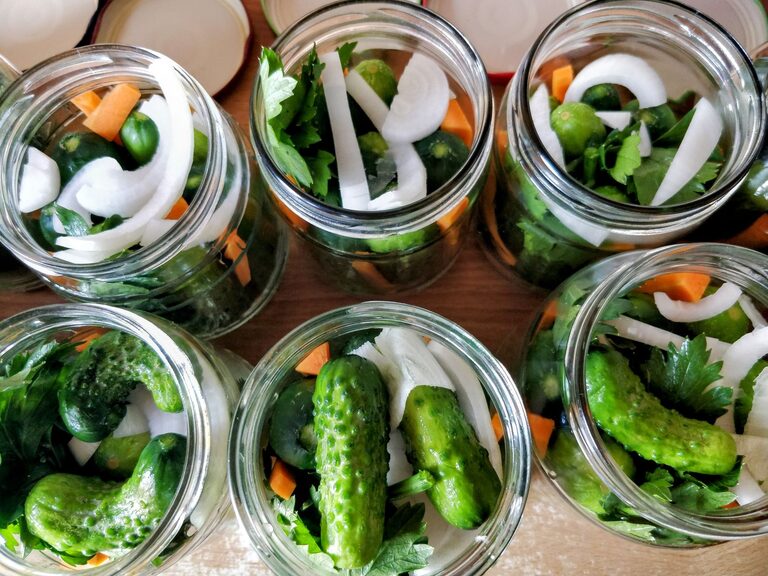
1. Classic Garlic Dill Cucumbers
Cucumbers are one of the easiest vegetables to pickle. For a traditional flavor, add:
– Fresh dill or dried dill seed
– Sliced garlic
– Black peppercorns
– A pinch of red pepper flakes, if desired
Use small cucumbers or slice larger ones into spears or rounds. Spears tend to stay crisp, while rounds are convenient for sandwiches and burgers. Let them rest in the refrigerator for at least a few hours, although the flavor will become fuller after a day.
2. Quick Pickled Red Onions
Pickled red onions add color and tang to tacos, grain bowls, salads, sandwiches, and roasted vegetables. Slice one small red onion into thin rings and pack them into a jar.
For a balanced flavor, use a little sugar in the brine. Add black pepper, coriander seeds, or a strip of citrus peel. The onions will begin to soften and turn bright pink as they sit. They are often ready after 30 minutes, but they become more flavorful after several hours.
3. Spicy Pickled Carrots
Carrots hold their crunch and pair well with bold spices. Cut them into thin sticks or ribbons, then add:
– Garlic
– Jalapeño slices
– Cumin seeds
– Oregano
– A small amount of sugar
These pickled carrots are especially good with rice dishes, sandwiches, wraps, and roasted meats. For a mixed jar, add a few pieces of sliced onion or radish.
4. Pickled Jalapeños
Pickled jalapeños are a useful way to preserve a small number of peppers. Slice the peppers into rings and add garlic, oregano, and a few black peppercorns.
For a sweeter style, add extra sugar to the brine. For a more savory version, use mustard seeds or a bay leaf. Remove some of the seeds before pickling if you prefer a milder result, though the heat level can vary from pepper to pepper.
5. Tangy Green Beans
Fresh green beans make a crisp and colorful pickle. Trim the ends and cut the beans to fit the jar. Add dill, garlic, mustard seeds, or a pinch of chili flakes.
Because green beans are firm, they benefit from a brief blanching before pickling. Place them in boiling water for a short time, then transfer them to ice water. This helps soften them slightly while preserving their color and texture.
6. Pickled Radishes
Radishes become milder and more tender in a vinegar brine. Slice them thinly or cut them into wedges, depending on how you plan to serve them.
Try adding ginger, rice vinegar, sesame seeds, or a small amount of honey. Pickled radishes are excellent in noodle bowls, tacos, salads, and sandwiches. Their pink edges also make a simple meal look more colorful.
7. Pickled Fruit
Fruit can be pickled too, especially when it is firm and slightly underripe. Try thin slices of apple, pear, peach, or pineapple with a lightly sweet brine.
Use rice vinegar or apple cider vinegar, then add cinnamon, star anise, ginger, or citrus peel. Serve pickled fruit with cheese, grilled foods, salads, or toasted bread. Keep the spices balanced so they support the fruit rather than overpower it.
How to Build Your Own Flavor Combinations
A useful way to create new pickles is to choose one ingredient from each category:
– Base: cucumber, onion, carrot, radish, pepper, or fruit
– Vinegar: white, apple cider, rice, or red wine vinegar
– Aromatic: garlic, ginger, shallot, or citrus peel
– Herb: dill, thyme, oregano, cilantro, or rosemary
– Spice: peppercorns, mustard seeds, coriander, cumin, or chili flakes
– Sweet element: sugar, honey, or maple syrup
Start with one or two flavor additions rather than filling the jar with every spice in the cupboard. Simple combinations are easier to evaluate and adjust the next time.
Tips for Crisp, Flavorful Pickles
Cut vegetables into similar sizes so they absorb the brine evenly. Pack them firmly into the jar, but do not crush or overfill them. Make sure the brine covers the produce completely.
Label each jar with the date and ingredients. This makes it easier to compare batches and remember which combinations you enjoyed. Store refrigerator pickles in the refrigerator and use clean utensils when serving.
Flavor often improves after several hours, so give the pickles time to rest before judging them. However, texture can soften as the vegetables sit. Make small batches that you can enjoy within a reasonable period rather than preparing more than you need.
Discard pickles if they develop an unpleasant odor, unusual color, mold, or a slimy texture. When in doubt, do not taste them. Clean jars, fresh produce, and careful refrigeration help keep the hobby enjoyable and straightforward.
Make Pickling a Regular Kitchen Ritual
Small-batch pickling is an easy way to use seasonal produce and add variety to familiar meals. Set aside one evening each week to try a new vegetable, vinegar, or spice combination. Keep notes on the brine, resting time, and results.
Before long, you may have a collection of favorite jars ready for sandwiches, salads, snacks, and dinner plates. With a few simple ingredients and a spirit of experimentation, pickling can become a flavorful, practical hobby for any kitchen.